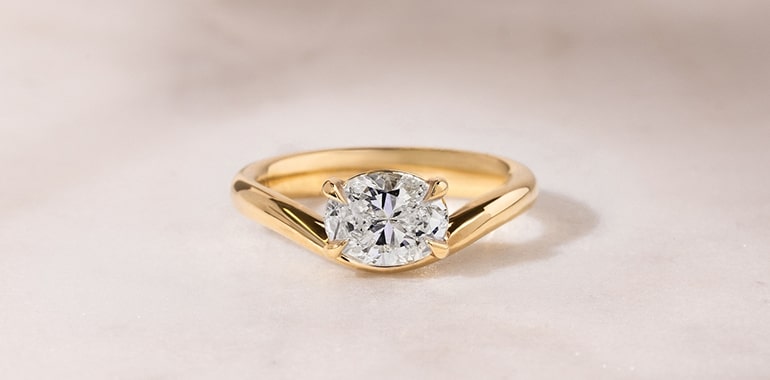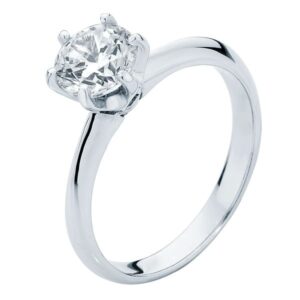

Here at Larsen, our focus is on creating jewellery that lasts a lifetime. When it comes to choosing a metal for an engagement ring, it’s important to choose a metal that is suitable for everyday wear. It is for this reason that we make all of our Larsen engagement rings with 18ct yellow, white and rose gold, as well as platinum.
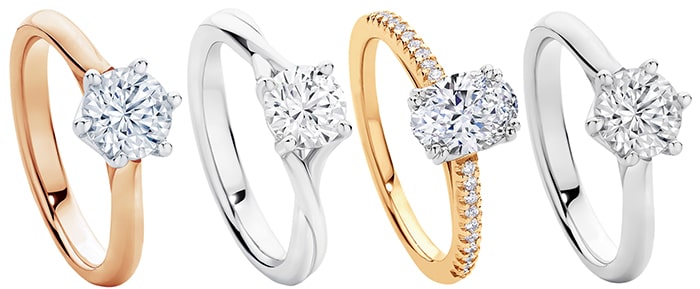
Another option to consider is to create a ring using a combination of two or more metals. A popular example of this is to use a white gold setting on a yellow or rose gold ring so as to keep a neutral colour under and around the diamond.
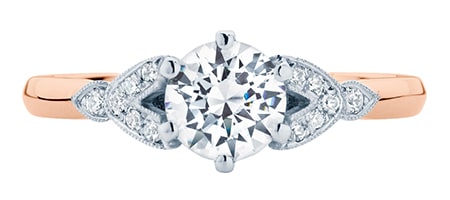
When it comes to choosing the centrepiece for your engagement ring It can feel like you’re faced with endless options, so we have broken it down to a few simple categories to help you decide.
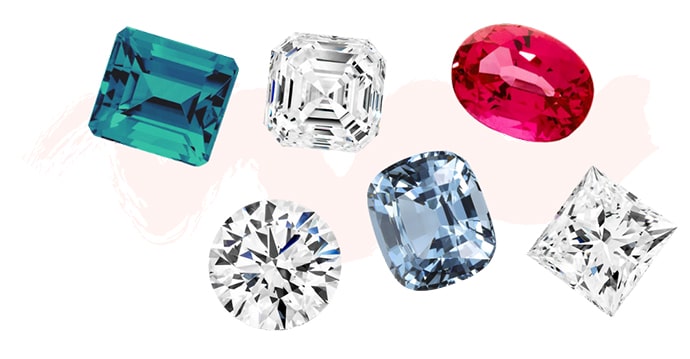
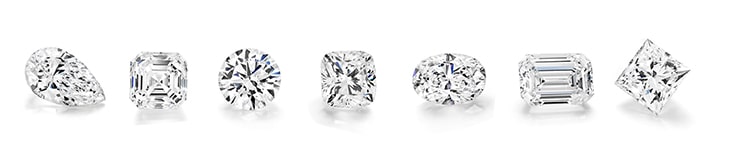
As the traditional option, a diamond is a classic, enduring choice for an engagement ring. Diamonds are the hardest natural substance known to man, rating 10 on the Moh’s scale of hardness. This means it cannot be scratched by anything other than another diamond, so it will keep its crisp brilliance longer than all other gemstones. As well as their exceptional hardness, diamonds are prized for their ability to interact with light which provides us with those wonderful flashes of rainbow colours and that characteristic diamond “twinkle”. Head on over to our diamond education page to learn more about diamond characteristics.
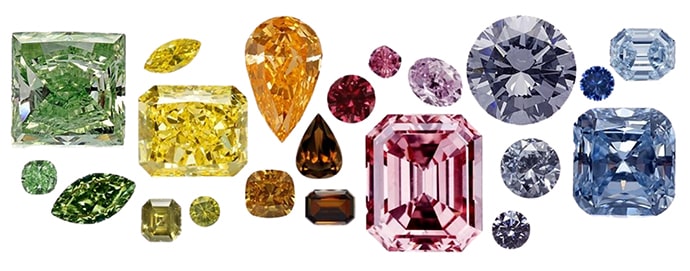
The most popular diamonds are colourless, but the coloured varieties are equally beautiful. Diamonds occur naturally in many shades such as pale champagne colours to dark chocolate brown. Yellow diamonds are also increasingly popular and can be vivid in colour ranging to very subtle tints. The most valuable colours are also the rarest. Pink, red, blue and green natural diamonds are among some of the most beautiful and the most collectable gemstones in the world.
For a coloured stone that ticks all the boxes for durability, beauty and colour range we recommend corundum – a crystal better known as sapphires and rubies. Corundum is the next hardest natural mineral to diamond, making it highly scratch resistant and a perfect choice for every-day wear.
While sapphires are most known for their stunning blue hues, they can be sourced in many other colours including gorgeous tones of green, yellow, pink, orange, black, purple, teal, mauve… almost any colour you can think of. A red corundum is referred to as a ruby.
The price range of sapphires and rubies is just as varied as their colour range. Here at Larsen, our gemmologists can source specific sapphires that suit your preference for colour, shape and budget. You will have the opportunity to view any sourced gemstones in person before you commit to purchase, so you can be 100% confident that you have the perfect stone for your ring.
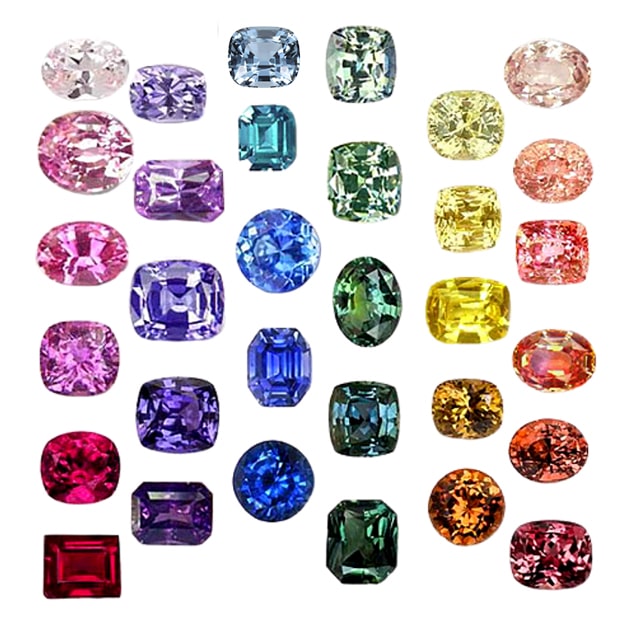
This image captures an example of the wide variety of colours and intensities for which sapphires are famous
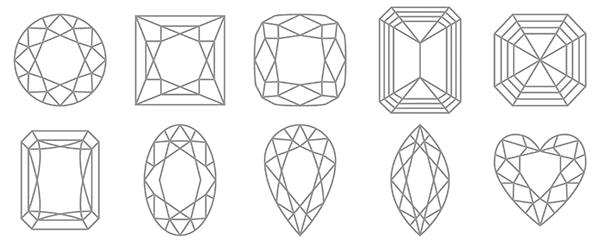
Diamonds and coloured gemstones come in a wide variety of shapes. The most common of these are round brilliant, princess, cushion, radiant, asscher, emerald, marquise, pear, oval and heart.
The iconic round brilliant cut is the most popular shape worldwide accounting for over 75% of diamonds purchased, followed by cushion cut (square with rounded edges) and oval cut.
The shape of your centre stone is a very personal choice and each cut comes with a wide variety of ring designs to suit. At Larsen Jewellery we can create a completely unique design for you using the shape of your centre stone as inspiration.
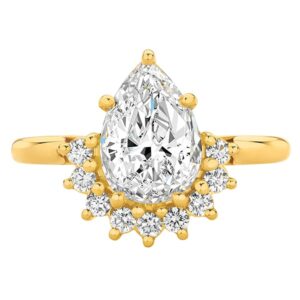
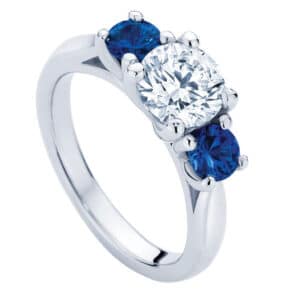
A popular choice for adding sparkle to your design is to add accent diamonds or gemstones around the centre stone. Whether they’re in a halo, a cluster, framing the centre stone or down the length of the band, these diamonds can add stunning detail and bring your engagement ring design to life.
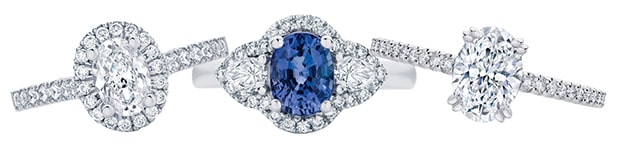
Generally, accent stones that add sparkle to a band are small and round in shape, but some designs lend themselves to square or rectangular stones offering a cleaner, more geometric look. Other unique shapes for accent diamonds include trillion, baguette, pear, marquise, halfmoon, trapezoid and bullet shapes which can create a lovely frame to a larger centre stone.
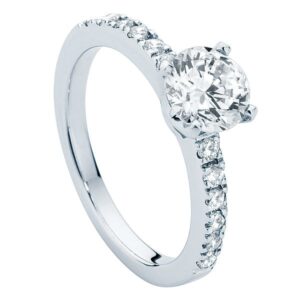
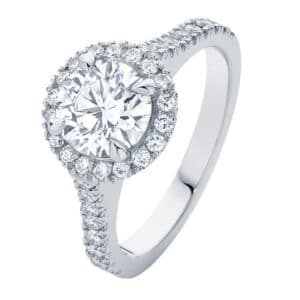
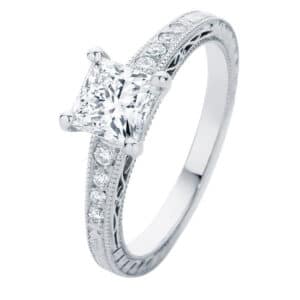
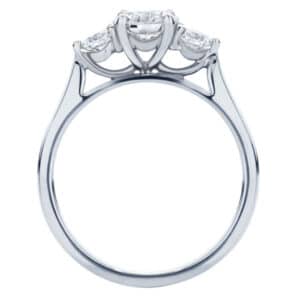
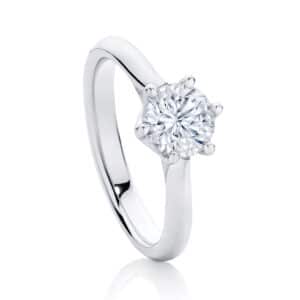
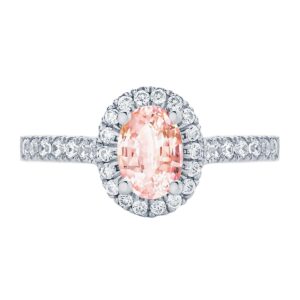
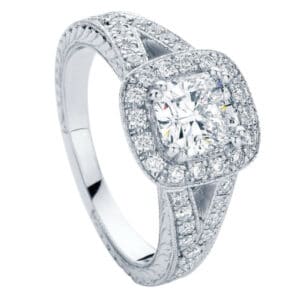
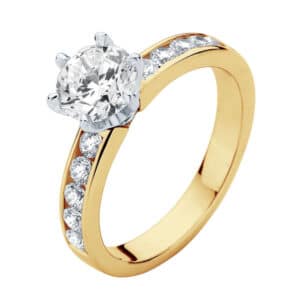
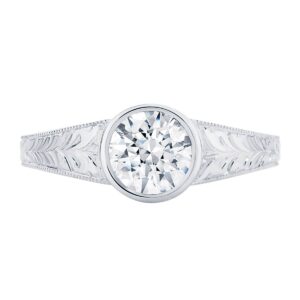
Open sections of the ring which contain intricate details are perfect for antique-inspired designs. A ring can feature these details in the centre setting alone or right throughout the top section.
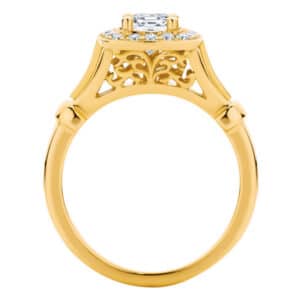
Florence design with filigree work under the setting
Millgrain refers to a technique where tiny beads are created along an edge of a ring, it looks particularly effective on grain set bands. This stippled effect features strongly in antique rings and is perfect to incorporate in vintage designs.
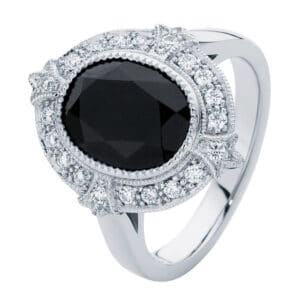
The Venezia design is finished with millgrain detail surrounding the grain set halo and along the centre bezel
Fine flourishes can be carved into the surface of rings through hand engraving by a master engraver. The detail achieved in the finely scored patterns of a hand engraved ring is unrivalled.
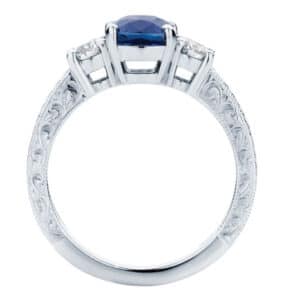
Bluebell (Engraved) is a stunning example of the fine detail that can be added by hand
In this guide so far, we have covered most of the elements that go into designing a custom-made engagement ring. There are some other aspects to consider from a design perspective. Would you like the centre setting to sit proudly above the band or to sit as low as possible against the finger? Would a cathedral setting be preferable to a ring with low shoulders? Your occupation and day-to-day activities may also factor in some design choices.
Another thing to consider is whether the engagement ring should be able to sit flush with a wedding ring. Most of our engagement ring designs are made to sit with a straight wedding band next to it. In designs where the base of the setting comes out further than the band, a wedding ring will need to be specially fitted around the setting. Our talented team of jewellers and designers will always be happy to give their advice on all design options.
For Petite Fingers
Firstly, for people with fingers that appear short, we suggest that it is a good idea to steer clear of wide rings. Fine, narrow rings are a much better option for creating the illusion of long fingers. Another consideration when choosing the shape of your centre stone is cuts which are elongated.
Shapes such as marquise, radiant or even oval cut allow the eye to be drawn down the length of the finger making it appear longer. There are many options, so there is no need to be concerned that your choice will be limited. A good jeweller will be able to help you come up with a beautiful design that suits you and your style.
For Long Fingers
For those with long fingers, you have the freedom to experiment with big and bold styles. Large stones look fabulous on your finger, so an engagement ring might be the perfect piece to splurge on something extra special. If a large stone is not an option, try creating a stack of rings or an art deco style, multi-stone ring that extends along your finger.
For Wide Fingers
For those with wide fingers then avoid stones that are narrow. Three stone and cluster designs are the perfect fit for you. Choose either a wide band that narrows towards the setting or a band that flares out as it meets the stone, both these options are more flattering than a ring that has the same width band all the way around.
Are There Any Designs That Can be Tricky to Resize?
There are certain designs that can be more complex to resize. These include rings that have gemstones that are set all the way around as well as rings that have a detailed hand-engraved patterns. To avoid running into any issues with these styles, one solution we recommend is to leave a blank section at the bottom of your ring to allow for any potential resizing in the future.
What if My Knuckle is Bigger Than the Rest of My Finger?
Sometimes the ring is slightly loose once the ring is over the knuckle and the ring spins a little too easily. There are a couple of things that can be done to help reduce this. If this issue is known in the design phase, then the shape of the band can be designed to add contact points. Adding features inside the band or, if possible, squaring the ring can keep the ring fitting firmer on the finger.
At times you may notice the ring may spin a little, even with the perfect fit. This is because engagement rings are usually top-heavy and gravity will tend to move them from side to side. Something to keep in mind is once a wedding ring is added beside the engagement ring, the engagement ring will sit in a slightly thicker part of the finger making it feel firmer and making it less prone to spinning.
Skin Tone
The general guide is white coloured metals suit cooler skin tones and gold suits warmer skin tones. In the middle is rose gold, which many would agree is the most versatile and suits most skin tones.
Those with a pink / rosy undertone who sunburn easily and find it difficult to tan usually fall under the cool skin tone category. The opposite of this, those with darker / olive skin who are less susceptible to sunburn and tan naturally fall into the warm skin tone.
If you don’t fall into either of these two categories then you most likely have ‘neutral’ skin tone. Neutral skin tones will easily suit most coloured metals and gemstones.
If you have cooler skin tone then bright colours like blue, pink, green and purple will look great on you. If you have warmer skin tones then earthier colours such as oranges, browns, yellows, reds and darker hues will look great on you.
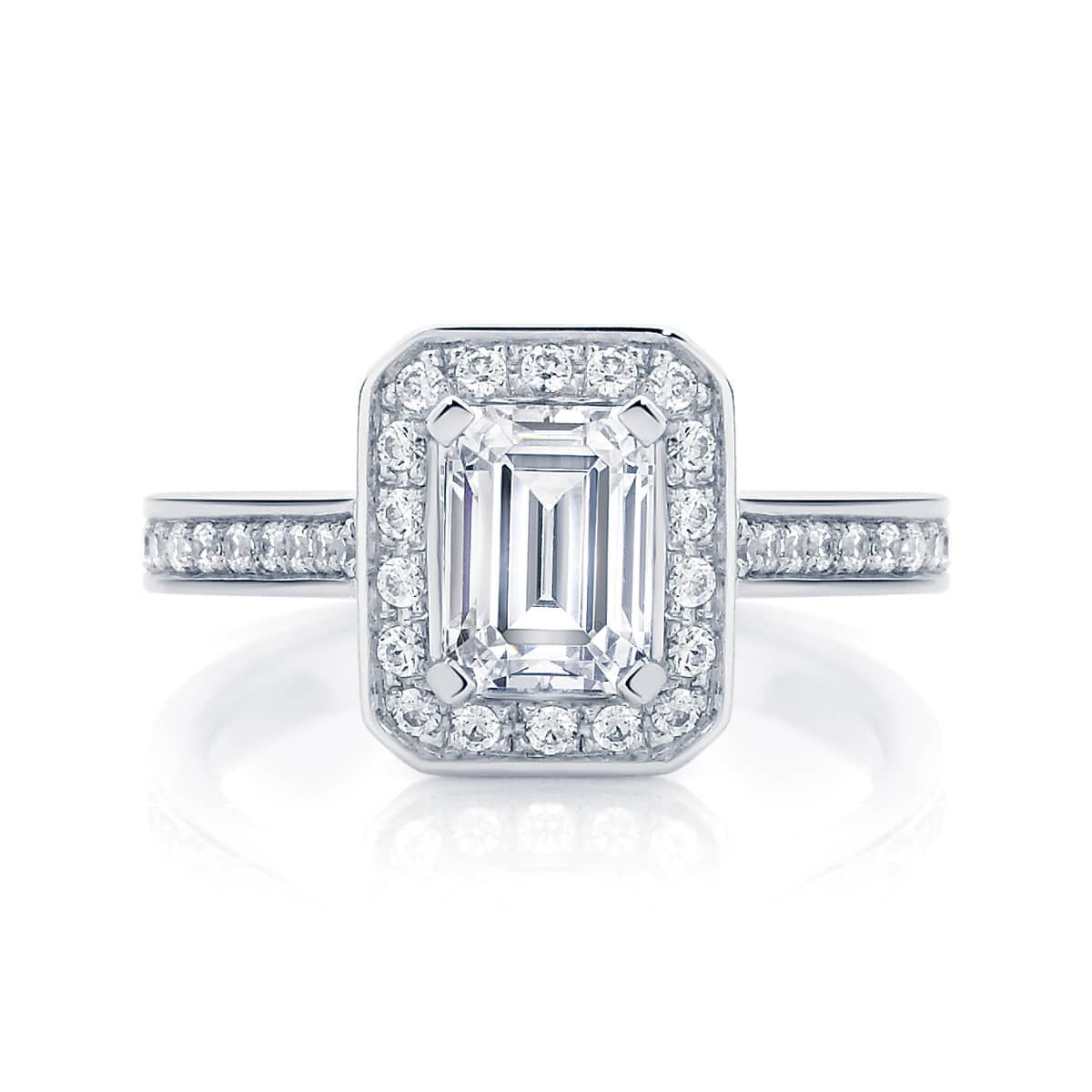
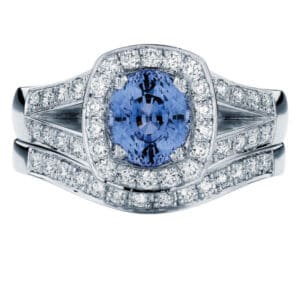
The Emerald Serenity design has a narrow bridge under the setting and will allow a straight wedding band to sit next to it without gaps. The Sky (Oval) is wider where the setting rests against the finger and needs a curved wedding band fitted to its shape.